
If you are trying to run a more efficient café or coffee cart without cutting corners on espresso quality, heating technology matters more than most people realize. Ascaso’s thermoblock system, paired with its T-Technology, is built around one simple idea. Heat only what you need, when you need it, and do it better than anyone else.
The result is faster warm-up, lower energy use, and fresh water for every shot. It is a modern approach to espresso that makes sense for busy cafés, mobile setups, and anyone thinking long term about operating costs and sustainability.
What Thermoblock Technology Actually Does
Multi-boiler espresso machines keep a large boiler hot all day, whether you are pulling shots or not. Thermoblock technology works differently. Water is heated on-demand as it moves through a compact metal heating block, instead of sitting in a hot boiler waiting to be used.
- That leads to a few practical advantages:
- Hot water is not sitting idle inside the machine
- The machine uses less power during downtime
- Warm-up time is significantly shorter
Thermoblock machines are known for fast readiness and lower overall energy use compared to traditional boiler systems. This technology is central to Ascaso’s commitment to designing a more sustainable espresso machine that still meets the demands of professional baristas and businesses.

T-Technology: Precision Meets Sustainability
On its own, thermoblock heating is efficient, but Ascaso’s T-Technology is what makes it precise.
In the Barista T Plus and Baby T Plus, thermoblock heating is supported by a layered temperature control system that includes:
- Independent PID control at each group
- Pre-heated water feeding into the brew system
- Tight temperature accuracy shot to shot
- Real-time digital temperature monitoring
This setup technology is designed to deliver consistent extraction without the energy demands of a full multi-boiler machine. You get stability where it matters, without heating more water than necessary.
Ascaso Machines Built for Real-World Use
Barista T Plus
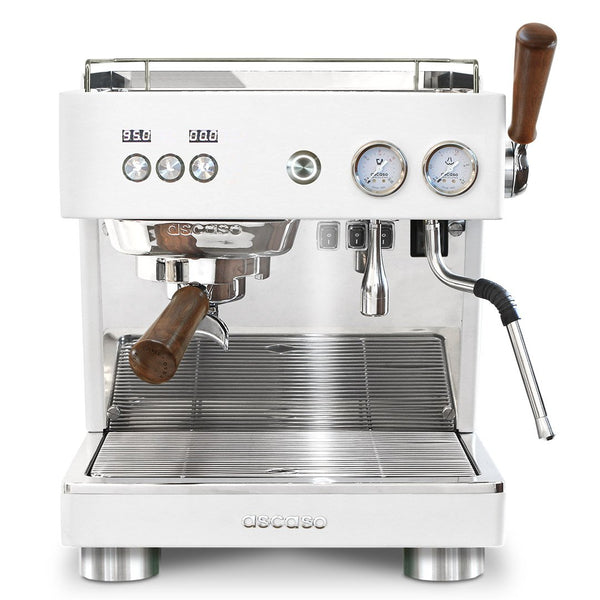
The Barista T Plus is built for cafés that need reliability during busy service. Brewing is handled by PID-controlled thermoblocks, while a dedicated boiler takes care of steam power for milk drinks.
Each group is digitally controlled, giving baristas consistency throughout the day. At the same time, the machine avoids the constant energy draw of keeping all the water in boilers hot. It is a strong option for shops that want performance with a lighter environmental footprint.

Baby T Plus
The Baby T Plus takes the same core technology and scales it down. Designed for prosumers, small cafés, and coffee carts, it delivers professional-level temperature control in a more compact format.
Its footprint works well in tight spaces, while still offering the control and consistency needed for serious espresso service.

How Thermoblock Machines Use Less Energy
With a thermoblock system, water is heated close to the group head and only when a shot is being pulled. That means less wasted energy during idle periods and no large volume of water being kept hot all day.
It also means each espresso shot is brewed with freshly hot water, rather than hot water that has been sitting in a boiler for hours. Over time, this approach can significantly reduce energy consumption compared to traditional boiler machines.
Thermoblock vs. Boiler: A Smarter Hybrid
Older thermoblock designs earned a reputation for weak steam or inconsistent temperatures. Ascaso addresses this by separating responsibilities. Thermoblocks handle brewing, while a traditional boiler is dedicated to steam.
This hybrid design delivers:
- Faster startup
- Lower idle energy use
- Fresh water for every extraction
- Strong, reliable steam for milk drinks
It is a practical solution that combines efficiency with the performance baristas expect.
Final Thoughts: A Smarter Way to Build an Espresso Machine
Ascaso’s thermoblock heating and T-Technology are a deliberate design choice aimed at improving efficiency, consistency, and daily usability.
For cafés upgrading equipment or baristas building out a coffee cart, this technology offers a more thoughtful balance of performance, control, and energy use. It is a modern take on espresso machines that fits the way many shops actually work today.